Imagine a CRM that doesn’t just store customer data but actually predicts their next move. Welcome to the era of AI-powered CRM software—where smart automation, predictive insights, and hyper-personalization are reshaping how businesses connect with customers.
What Is AI-Powered CRM Software?

AI-powered CRM software integrates artificial intelligence technologies into customer relationship management systems to automate tasks, analyze customer behavior, and deliver intelligent insights. Unlike traditional CRM platforms that rely heavily on manual input and static data, AI-enhanced systems learn from interactions, adapt over time, and proactively support sales, marketing, and service teams.
Core Components of AI in CRM
The integration of AI into CRM systems isn’t just a single feature—it’s a layered ecosystem of technologies working together to enhance performance. These components form the backbone of intelligent CRM platforms.
Natural Language Processing (NLP): Enables the system to understand and respond to human language in emails, chats, and voice calls.For example, AI can analyze customer service transcripts to detect sentiment or extract key issues.Machine Learning (ML): Allows the CRM to learn from historical data and improve predictions over time.This is used for forecasting sales, identifying high-value leads, and recommending next-best actions.Predictive Analytics: Uses statistical models to anticipate future customer behaviors, such as churn risk or purchase likelihood, based on patterns in past interactions.”AI in CRM is not about replacing humans—it’s about augmenting human intelligence with data-driven insights.” — Gartner ResearchHow AI Transforms Traditional CRMTraditional CRM systems are reactive: they record interactions after they happen.
.AI-powered CRM software, on the other hand, is proactive.It anticipates needs, surfaces insights before they’re requested, and automates repetitive tasks so teams can focus on strategy and relationships..
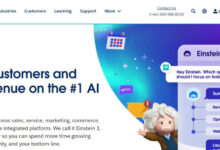
For instance, instead of manually logging calls or entering notes, AI can transcribe conversations in real time and update records automatically. Salesforce’s Einstein AI, for example, analyzes email content to suggest optimal follow-up times and even drafts personalized responses. Learn more about Salesforce Einstein.
This shift from passive data storage to active intelligence is what makes AI-powered CRM software a game-changer for modern businesses.
7 Key Benefits of AI-Powered CRM Software
The advantages of integrating AI into CRM go far beyond automation. From boosting sales efficiency to enhancing customer satisfaction, the impact is measurable and transformative. Let’s explore the seven most compelling benefits.
1. Smarter Lead Scoring and Prioritization
One of the biggest challenges in sales is knowing which leads to focus on. AI-powered CRM software uses behavioral data, engagement history, and demographic information to score leads with remarkable accuracy.
Traditional lead scoring often relies on static rules—like job title or company size. AI, however, analyzes dynamic signals such as email opens, website visits, content downloads, and social media interactions to determine a lead’s readiness to buy.
For example, if a lead visits your pricing page three times in a week and downloads a product brochure, AI flags them as high-intent. This allows sales teams to prioritize outreach and increase conversion rates. Zoho CRM’s Zia AI assistant offers real-time lead scoring based on over 50 behavioral parameters.
2. Enhanced Sales Forecasting Accuracy
Sales forecasting has long been a mix of art and guesswork. AI-powered CRM software changes that by analyzing historical deal data, pipeline velocity, and external factors (like seasonality or market trends) to generate highly accurate predictions.
Machine learning models can identify patterns that humans might miss—such as the correlation between demo length and deal closure rate. These insights help sales managers set realistic targets, allocate resources efficiently, and adjust strategies in real time.
According to a study by Nucleus Research, companies using AI for sales forecasting see up to a 10-20% increase in forecast accuracy. This translates into better revenue planning and reduced risk of over- or under-performance.
3. Hyper-Personalized Customer Experiences
Customers today expect personalized interactions. AI-powered CRM software enables businesses to deliver tailored content, product recommendations, and communication at scale.
By analyzing past purchases, browsing behavior, and engagement history, AI can predict what a customer is likely to need next. For instance, if a customer frequently buys running shoes every six months, the CRM can trigger a personalized email with a discount on their next pair—just before they’re likely to shop again.
HubSpot’s AI tools use customer journey mapping to recommend the best content for each stage of the buyer’s journey. Explore HubSpot’s AI-powered CRM features.
4. Automated Data Entry and Task Management
Data entry is one of the most time-consuming and error-prone tasks in CRM management. AI-powered CRM software eliminates this burden by automatically capturing and organizing data from emails, calls, meetings, and social media.
For example, when a sales rep finishes a call, AI can transcribe the conversation, extract action items, and update the contact record—all without manual input. This not only saves hours per week but also ensures data consistency and completeness.
Microsoft Dynamics 365 uses AI to auto-populate fields and suggest follow-up tasks based on meeting outcomes. This level of automation frees up sales teams to focus on building relationships rather than administrative work.
5. Real-Time Customer Insights and Sentiment Analysis
Understanding how customers feel is crucial for retention and satisfaction. AI-powered CRM software uses sentiment analysis to detect emotions in customer communications—whether it’s an email, chat, or support ticket.
If a customer uses phrases like “frustrated” or “disappointed,” the system can flag the interaction for immediate attention. Conversely, positive sentiment can trigger automated thank-you messages or loyalty rewards.
This real-time emotional intelligence allows companies to respond proactively, resolve issues before they escalate, and strengthen customer relationships. Oracle’s AI-powered service cloud, for instance, analyzes thousands of support tickets daily to identify emerging trends and sentiment shifts. Discover Oracle’s AI service solutions.
6. Predictive Customer Support and Churn Prevention
AI doesn’t just react to customer issues—it predicts them. By analyzing usage patterns, support history, and engagement levels, AI-powered CRM software can identify customers at risk of churning.
For example, if a customer stops logging into a SaaS platform or reduces feature usage, the system can alert the account manager and suggest retention strategies—like a personalized check-in call or a special offer.
This predictive capability is a major advantage in competitive markets where customer retention is more cost-effective than acquisition. A report by McKinsey found that AI-driven churn prediction can reduce customer attrition by up to 15%.
7. Seamless Integration with Marketing Automation
AI-powered CRM software doesn’t operate in isolation. It integrates seamlessly with marketing automation tools to create a unified customer experience across all touchpoints.
When a lead engages with a marketing campaign, AI can instantly update their profile, score their interest level, and route them to the right sales rep. It can also optimize email send times, personalize subject lines, and A/B test content based on predicted engagement.
Marketo and Adobe Experience Cloud, for example, use AI to align CRM data with campaign performance, enabling marketers to deliver the right message to the right person at the right time.
Top AI-Powered CRM Software Platforms in 2024
With so many options on the market, choosing the right AI-powered CRM software can be overwhelming. Here’s a breakdown of the leading platforms, their AI capabilities, and who they’re best suited for.
Salesforce Einstein AI
Salesforce remains the gold standard in CRM, and its Einstein AI suite adds powerful intelligence across sales, service, and marketing clouds.
Einstein Lead Scoring, Opportunity Insights, and Activity Capture are just a few of the AI-driven features that help sales teams work smarter. It also offers natural language search, predictive forecasting, and automated case classification for customer service.
Best for: Enterprises and mid-sized businesses looking for a comprehensive, scalable AI-powered CRM solution. Learn more at Salesforce.com.
HubSpot CRM with AI Tools
HubSpot has made significant strides in AI integration, offering features like AI-powered email writing, meeting summaries, and content recommendations.
Its AI assistant helps marketers generate blog ideas, optimize CTAs, and personalize workflows. For sales teams, it auto-logs calls, suggests follow-ups, and predicts deal stages based on historical data.
Best for: Small to mid-sized businesses that want an affordable, user-friendly AI-powered CRM with strong marketing automation. Explore HubSpot’s AI features.
Microsoft Dynamics 365 + AI Builder
Microsoft’s Dynamics 365 combines CRM and ERP functionalities with AI Builder, a low-code platform for creating custom AI models.
It offers AI-driven insights for sales forecasting, customer service routing, and marketing personalization. Integration with Microsoft Teams and Office 365 makes it ideal for organizations already in the Microsoft ecosystem.
Best for: Large enterprises and organizations deeply invested in Microsoft products. Visit Microsoft Dynamics AI page.
How AI-Powered CRM Software Improves Sales Efficiency
Sales teams are under constant pressure to do more with less. AI-powered CRM software acts as a force multiplier, enhancing productivity, accuracy, and decision-making across the sales cycle.
Automated Follow-Ups and Next-Best Actions
One of the most time-consuming aspects of sales is knowing when and how to follow up. AI-powered CRM software analyzes communication patterns and customer behavior to recommend the optimal time and method for outreach.
For example, if a prospect opens an email but doesn’t reply, the system might suggest sending a short video message two days later. These AI-driven “next-best actions” increase response rates and keep deals moving forward.
Insightly’s AI features include automated follow-up reminders and intelligent task prioritization, helping sales reps stay on top of their pipelines without micromanagement.
Intelligent Meeting Assistants
AI-powered CRM software now includes virtual meeting assistants that join calls, take notes, and summarize key points. These tools eliminate the need for manual note-taking and ensure nothing is missed during client conversations.
For instance, Gong and Chorus integrate with CRM platforms to record, transcribe, and analyze sales calls. They highlight talking points, identify objections, and even coach reps on improving their pitch based on AI insights.
This level of intelligence transforms meetings from passive conversations into data-rich interactions that drive better outcomes.
Reduced Administrative Burden
Studies show that sales reps spend nearly 34% of their time on administrative tasks. AI-powered CRM software can cut this in half by automating data entry, updating records, and generating reports.
When reps spend less time on paperwork, they can focus on building relationships, closing deals, and growing revenue. This not only boosts efficiency but also improves job satisfaction and reduces burnout.
The Role of AI in Customer Service and Support
Customer service is no longer just about resolving issues—it’s about creating memorable experiences. AI-powered CRM software plays a crucial role in delivering fast, personalized, and proactive support.
AI Chatbots and Virtual Agents
AI chatbots are now a standard feature in AI-powered CRM software. They handle routine inquiries 24/7, freeing up human agents for complex issues.
Modern chatbots use NLP to understand context and intent, allowing them to resolve issues like password resets, order tracking, and FAQs with high accuracy. When a conversation gets too complex, the bot seamlessly hands it off to a live agent—with full context preserved.
Zendesk’s Answer Bot, for example, reduces ticket volume by up to 40% by resolving common queries instantly. See how Zendesk uses AI.
Predictive Support and Proactive Engagement
Instead of waiting for customers to report problems, AI-powered CRM software can anticipate them. For example, if a user struggles with a feature during onboarding, the system can trigger an in-app tutorial or offer a live chat session.
This proactive approach not only improves user experience but also reduces churn. According to Forrester, companies that use predictive support see a 20-30% increase in customer satisfaction scores.
Knowledge Base Optimization
AI continuously improves internal knowledge bases by analyzing support tickets and identifying gaps in documentation. If multiple customers ask the same question, the system can suggest creating a new help article or updating an existing one.
This self-improving knowledge ecosystem ensures that both agents and customers have access to accurate, up-to-date information—reducing resolution times and improving consistency.
Challenges and Limitations of AI-Powered CRM Software
While the benefits are significant, adopting AI-powered CRM software is not without challenges. Organizations must navigate data privacy, integration complexity, and employee resistance to fully realize its potential.
Data Quality and Integration Issues
AI models are only as good as the data they’re trained on. Incomplete, outdated, or siloed data can lead to inaccurate predictions and poor recommendations.
Many companies struggle with integrating AI-powered CRM software with legacy systems, third-party apps, or on-premise databases. Without a unified data strategy, AI insights may be fragmented or misleading.
Solution: Invest in data cleansing, implement robust integration tools (like MuleSoft or Zapier), and establish data governance policies to ensure quality and consistency.
Privacy and Ethical Concerns
AI-powered CRM software collects and analyzes vast amounts of personal data, raising concerns about privacy and compliance. Regulations like GDPR and CCPA require transparency in data usage and user consent.
There’s also the risk of algorithmic bias—where AI models make unfair assumptions based on skewed training data. For example, a lead scoring model might inadvertently favor certain demographics over others.
Solution: Choose CRM platforms with strong privacy controls, conduct regular audits of AI models, and ensure transparency in how data is used and decisions are made.
User Adoption and Training
Even the most advanced AI tools are useless if employees don’t use them. Resistance to change, lack of training, and fear of job displacement can hinder adoption.
Sales and service teams may distrust AI recommendations or feel overwhelmed by new workflows. Without proper change management, the ROI on AI-powered CRM software can be limited.
Solution: Provide hands-on training, demonstrate clear value through pilot programs, and involve users in the implementation process to build trust and buy-in.
Future Trends in AI-Powered CRM Software
The evolution of AI-powered CRM software is far from over. As technology advances, we can expect even deeper integration, greater intelligence, and more human-like interactions.
Generative AI for Content Creation
Generative AI is transforming how businesses create content. In CRM, this means AI can draft personalized emails, generate sales proposals, and even write social media posts based on customer profiles.
Tools like Jasper and Copy.ai are already being integrated into CRM platforms to help marketers and sales reps produce high-quality content at scale. This trend will accelerate as large language models become more accurate and context-aware.
Emotion AI and Voice Analytics
Future AI-powered CRM software will go beyond text and data to analyze voice tone, facial expressions, and emotional cues during video calls.
Emotion AI can detect frustration, excitement, or hesitation in real time, allowing reps to adjust their approach instantly. This level of emotional intelligence will redefine customer engagement and empathy in digital interactions.
Autonomous CRM Agents
Imagine a CRM that doesn’t just assist but acts on your behalf. Autonomous AI agents could schedule meetings, negotiate pricing, and even close simple deals without human intervention.
While fully autonomous CRM is still years away, early versions are emerging in chatbots and virtual sales assistants. As AI becomes more sophisticated, these agents will handle increasingly complex tasks, freeing humans for strategic decision-making.
What is AI-powered CRM software?
AI-powered CRM software integrates artificial intelligence technologies—like machine learning, natural language processing, and predictive analytics—into customer relationship management systems to automate tasks, provide intelligent insights, and improve customer interactions.
How does AI improve lead scoring in CRM?
AI improves lead scoring by analyzing behavioral data, engagement history, and demographic information to predict a lead’s likelihood to convert. Unlike rule-based scoring, AI adapts over time and considers dynamic factors like website visits, email interactions, and content downloads for more accurate prioritization.
Can AI-powered CRM software reduce customer churn?
Yes, AI-powered CRM software can significantly reduce customer churn by identifying at-risk customers through usage patterns, support history, and sentiment analysis. It enables proactive engagement with personalized offers, check-ins, or support, improving retention rates.
Is AI in CRM replacing human sales reps?
No, AI is not replacing human sales reps—it’s augmenting them. AI handles repetitive tasks like data entry and follow-up scheduling, allowing reps to focus on building relationships, negotiating deals, and providing personalized service where human touch matters most.
What are the best AI-powered CRM platforms?
Top AI-powered CRM platforms include Salesforce Einstein, HubSpot CRM with AI tools, Microsoft Dynamics 365, Zoho CRM with Zia, and Oracle CX. Each offers unique AI capabilities tailored to different business sizes and industries.
The rise of AI-powered CRM software marks a fundamental shift in how businesses manage customer relationships. From smarter lead scoring to predictive support and hyper-personalization, AI is turning CRM from a data repository into a strategic intelligence engine. While challenges like data quality and user adoption remain, the benefits far outweigh the risks for organizations willing to embrace the change. As AI continues to evolve, the future of CRM will be more proactive, intuitive, and human-centered than ever before.
Further Reading:
